Hill Times: Courts unlikely to provide fifth extension to Ottawa to address Lost Canadians before November, says immigration lawyer
Hill Times: Courts unlikely to provide fifth extension to Ottawa to address Lost Canadians before November, says immigration lawyer
Parliament needs to “just get on with it” and address the issue of “lost Canadians” through amendments to the Canada Citizenship Act, according to Jenny Kwan, NDP critic of citizenship and immigration.
She told The Hill Times that she wonders if a judge would have the patience to grant the federal government a fifth extension on a court order requiring action before the current November deadline.
“This is astounding. What the current situation is right now is that Canada’s Citizenship Act, with respect to lost Canadians, is in violation of the Charter [of Rights and Freedoms], and [Bill C-3] will make it Charter-compliant,” said Kwan (Vancouver East, B.C.).
The Ontario Superior Court of Justice has imposed a deadline of Nov. 20, 2025, for the federal government to amend provisions of the first-generation limit for those born abroad.
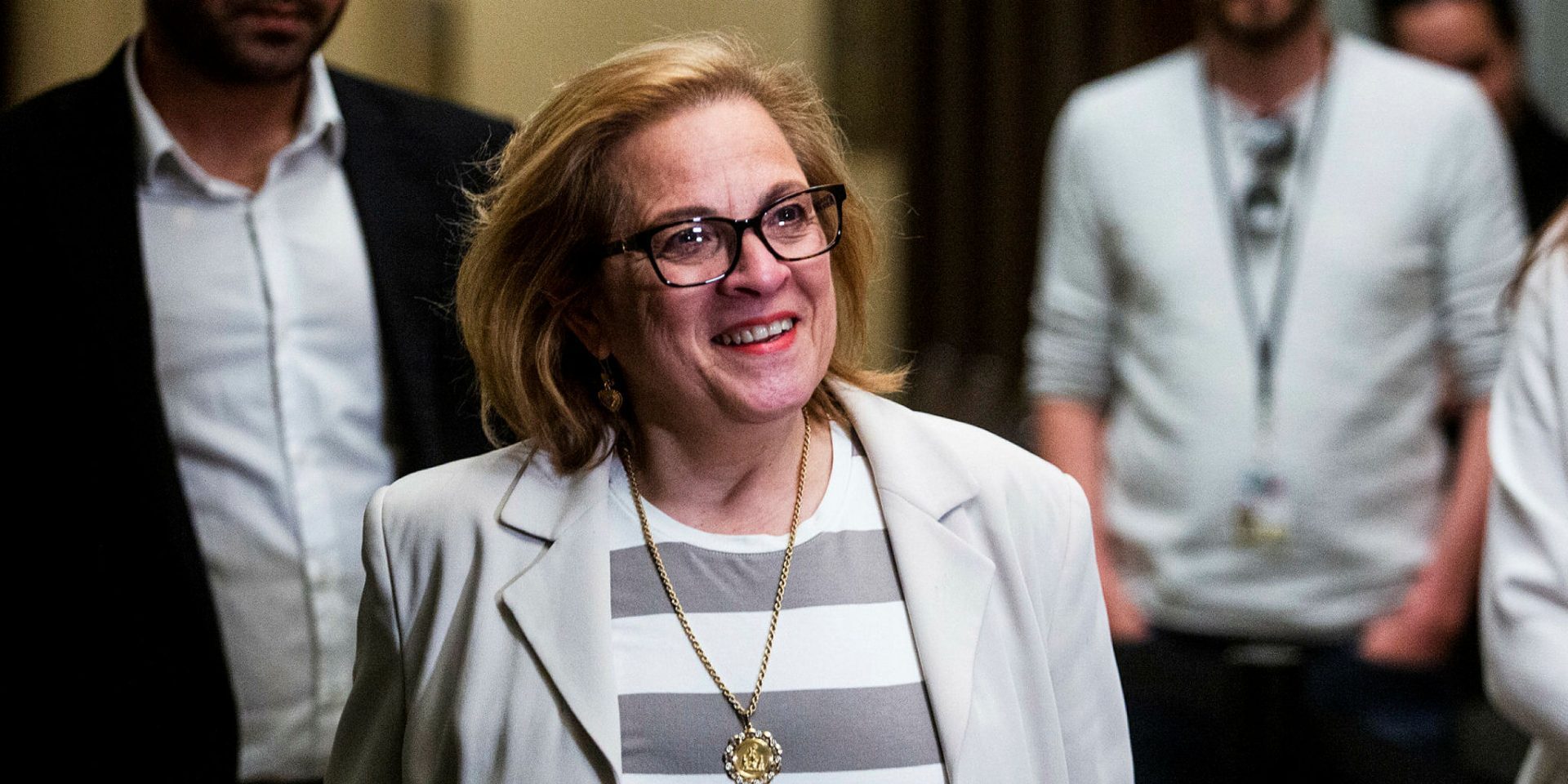
Minister of Immigration, Refugees and Citizenship Lena Metlege Diab said, 'Citizenship is more than a legal status—it’s a profound connection to the values, history, and spirit of Canada,' in a June 5 Immigration press release. The Hill Times photograph by Andrew Meade
NEWS | BY JESSE CNOCKAERT | July 14, 2025
Parliament needs to “just get on with it” and address the issue of “lost Canadians” through amendments to the Canada Citizenship Act, according to Jenny Kwan, NDP critic of citizenship and immigration.
She told The Hill Times that she wonders if a judge would have the patience to grant the federal government a fifth extension on a court order requiring action before the current November deadline.
“This is astounding. What the current situation is right now is that Canada’s Citizenship Act, with respect to lost Canadians, is in violation of the Charter [of Rights and Freedoms], and [Bill C-3] will make it Charter-compliant,” said Kwan (Vancouver East, B.C.).
“I don’t know how much patience [the judge] will have to continue to see delays in the passage of the bill to make it Charter-compliant.”
Immigration Minister Lena Metlege Diab (Halifax West, N.S.) tabled Bill C-3, an Act to amend the Citizenship Act (2025), in the House on June 5. The House rose for the summer on June 20, pausing the bill’s progress until Sept. 15, when the next parliamentary sitting begins.
If passed, the bill would reverse a change to the Citizenship Act made by then-Conservative prime minister Stephen Harper in 2009 that introduced a “first-generation limit” when it came to citizenship status. Since that 2009 amendment, a Canadian citizen who was born outside of Canada cannot pass citizenship status on to their child if that child was also born or adopted outside the country.
The Ontario Superior Court of Justice declared in December 2023, that the first-generation limit was unconstitutional on the grounds that it unjustifiably limited mobility and equality rights under the Charter of Rights and Freedoms. At that time, the Court gave the federal government a deadline of six months to fix the law through legislation. This deadline was later extended on four occasions, with the current deadline set as Nov. 20, 2025.
Kwan described Bill C-3 as “a significant piece of legislation that needs to be done,” in an interview with The Hill Times. The bill is nearly identical to the former Bill C-71, which was introduced in May 2024, but died on the order paper when Parliament was prorogued on Jan. 6, 2025.
Kwan argued that a Conservative filibuster in the fall sitting that delayed progress in the House contributed to death of Bill C-71.
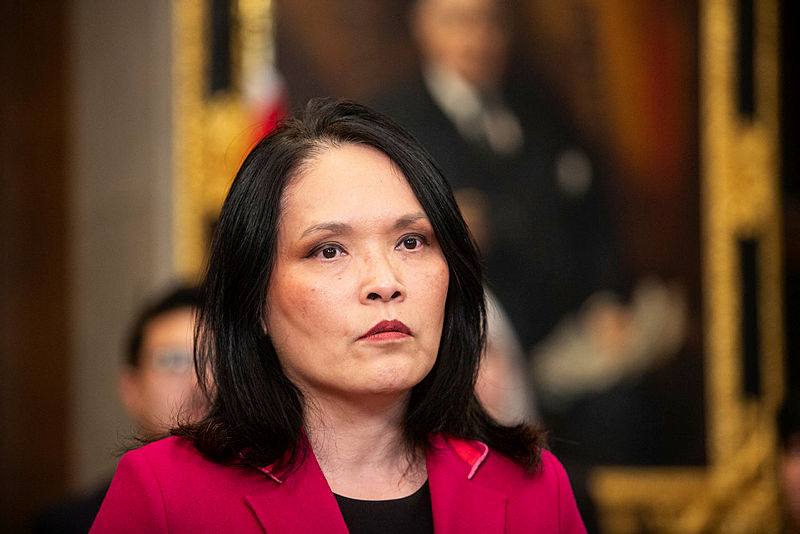
NDP MP Jenny Kwan says Bill C-3 is ‘a significant piece of legislation that needs to be done.’ The Hill Times photograph by Andrew Meade
“Basically, nothing got through, and [Bill C-71] also died on the order paper. So, in this round, it will depend on whether or not the Conservatives will continue to play political games ahead of lost Canadians,” said Kwan.
The Hill Times reached out to Conservative MPs including citizenship and immigration critic Michelle Rempel Garner (Calgary Nose Hill, Alta.) and Brad Redekopp (Saskatoon West, Sask.), a member of the House citizenship committee, but did not receive a response by deadline.
Bill C-3 would amend the Citizenship Act to automatically grant Canadian citizenship to anyone who would be a citizen today were it not for the first-generation limit. The bill would also introduce a “substantial connection test” for Canadian citizens born outside of Canada who wish to pass on citizenship to their children born abroad. Going forward, the bill would allow access to citizenship beyond the first generation, so long as the parent has spent at least 1,095 cumulative—not necessarily consecutive—days in Canada prior to the birth of their child.
Redekopp told the House on June 19 that Conservatives have significant issues with Bill C-3, and criticized the substantial connection test of 1,095 non-consecutive days as “not substantial at all.”
“It is a very weak way to commit to being a Canadian citizen and then to confer that citizenship onto children. It is not a real test of commitment because the days do not have to be consecutive,” Redekopp told the House. “Also, people need to understand the current situation in our country. They need to live here to understand how things are and some of the issues we have right now in our country … People do not know that if they are living in another country.”
Kwan argued that objections to the non-consecutive 1,095-day minimum don’t make sense.
“Take, for example, a person who’s a pilot, right? You travel all the time. You could be a second-generation born and you’re a pilot. You fly out of Canada regularly as a pilot, and then that means you’re leaving Canada all the time. So, does that mean to say that they can never get a Canadian citizenship? That doesn’t make any sense at all,” she said.
“You have to recognize the fact that we live in a global society now. Canada is a global country, and people move. You have to make sure that is addressed in such a way that fits the times of today.”
Ryan Neely, an immigration lawyer and partner at McCrea Immigration Law in British Columbia, told The Hill Times that he expects it is unlikely that the federal government could get yet another extension from the court to have more time to amend the Citizenship Act. He said this is because the most recent extension was for only a period of eight months, and not the full 12 months that was requested by the government.
Ryan Neely, a partner at McCrea Immigration Law, argued it’s unlikely that Ottawa could get another court extension for more time to amend the Citizenship Act. ‘We’re looking at almost two years of offending legislation,’ he says. Photograph courtesy of Ryan Neely
“[The court has] been very clear in the way that they’ve handled the extensions that this is it,” said Neely. “We’re looking at almost two years of offending legislation. I cannot see us getting past a two-year mark.”
If the government does not pass Bill C-3 by the November deadline, and the courts issue no further extension to the ruling, then Section 3(3) of the Citizenship Act will be “of no force or effect,” which means Canada would be left with the citizenship-by-descent rules that were used prior to the 2009 amendments by the Harper government, effectively eliminating the first-generation limit.
However, if the bill doesn’t pass, that would mean that the substantial connection test part of the bill wouldn’t be implemented, according to Neely.
“[If] they don’t pass it, and the courts are fed up and they say, ‘we’re just striking it down,’ now you have just literally a gap, a hole, and there are no guidelines on the sides of it requiring the connection test,” he said.
The federal government did not appeal the court’s 2023 ruling because they agreed that “the current law has unacceptable consequences for Canadians whose children were born outside the country,” according to a press release from Immigration.
Amandeep Hayer, an immigration lawyer with Hayer Law and an executive member of the Canadian Bar Association (CBA) Immigration Law Section for B.C., told The Hill Times that Bill C-3 has potential to address a gender discrimination issue in the Citizenship Act.
The act, which came into force on Jan. 1, 1947, carried forward several “antiquated concepts” from the 1914 Nationalization Act, and introduced several limitations on the acquisition of citizenship, according to a letter from the CBA to the Senate’s social affairs committee on Dec. 2, 2024. One of those limitations was that for a child born in wedlock, citizenship by descent could be acquired only through a Canadian father, but not through a Canadian mother, and if the parents were unmarried, citizenship could be acquired only through the mother.
“The initial 1947 Act, along with the subsequent 1952 Act and earlier British Nationality Acts, presented a major issue: they were heavily discriminatory based on gender and marital status. Specifically, a woman could only pass on her Canadian citizenship or British nationality if she was unmarried at the time of her child’s birth. Conversely, a man could pass on his Canadian citizenship or British nationality to his wife’s children,” said Hayer in an emailed statement on July 9.
“Additionally, Canadian citizenship or British nationality could be lost under several circumstances, such as a woman marrying a foreign national and acquiring citizenship in that country, being born outside Canada and having one’s birth unregistered with Canadian authorities, or having one’s mother marry a foreign national while they were minors or having one’s father acquire citizenship in another country,” he added.
According to Hayer, this discriminatory practice persisted until Parliament introduced a new Citizenship Act, effective Feb. 15, 1977, which stipulated that anyone born outside of Canada would be a Canadian citizen regardless of their parent’s gender, and the maintenance that one’s Canadian citizenship was unaffected by their parent’s actions.
However, this act applied only prospectively, meaning it only covered those born after Feb. 15, 1977. For those born before, the old laws continued to apply, albeit with some amendments made in 2009 and 2014, Hayer said.
“In a landmark unanimous decision in 1997, the Supreme Court ruled that the retrospective application of the old laws amounted to gender discrimination, violating section 15 of the Charter of Rights and Freedoms. Since then, the courts and Parliament have been engaged in a back-and-forth process to address potential issues and fix them with narrowly focused legislation,” he said in the email.
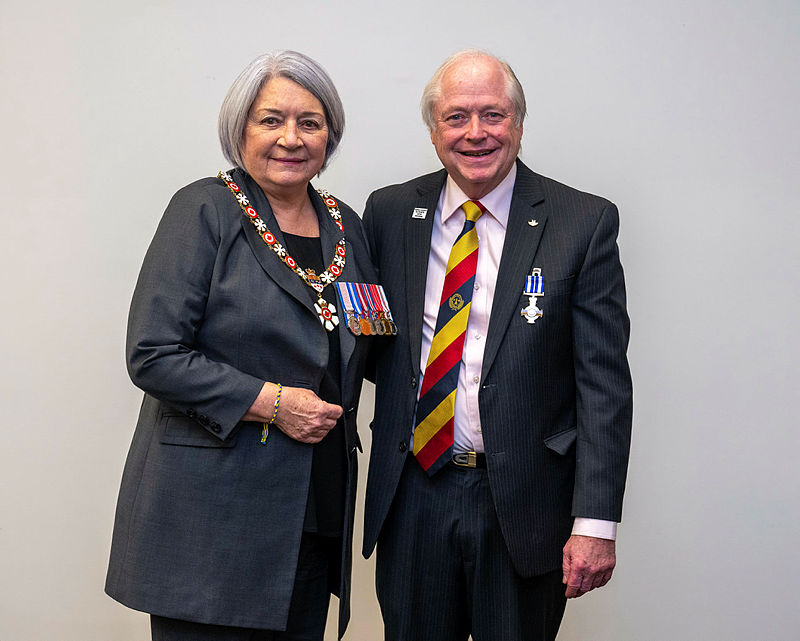
Don Chapman, right, was honored by Governor General Mary Simon during an award ceremony on Feb. 7, 2025, to thank individuals who have made significant contributions to Canada and who have inspired others to help build a better country. Photograph courtesy of PO 2 Louis Dubé, Rideau Hall
Don Chapman, a long-time advocate for restoring citizenship to lost Canadians, told The Hill Times that he considers Bill C-3 “good to pass,” although added that a deficiency he sees in the legislation is it doesn’t specify that citizenship is a right.
“Citizenship in Canada is not a right. It’s privilege,” he said. “You tell me how bad that could be if we elected a Donald Trump. I mean, Trump would be out there canceling everybody’s citizenship. And we’re very complacent in Canada where we go, ‘well, that wouldn’t happen.’ Like hell, it wouldn’t. Canada’s been stripping people of citizenship since there’s been a Canada.”
Chapman was stripped of his Canadian citizenship 64 years ago because of the rules under the Citizenship Act at that time. When Chapman was six years old, his father moved his family to the United States and took an American citizenship. Because his father had given up his Canadian citizenship, Chapman’s Canadian citizenship was automatically revoked.
“I wanted to know why I couldn’t be a citizen of my own country, and it turned out that I was stripped because I was born in Canada in wedlock and I was not adopted. Had any of those things been different, I would have remained Canadian. See how nutty this gets real fast?” he said.
A legislative amendment to the Citizenship Act in 2009 restored Chapman’s status as a Canadian citizen, following years of advocacy and lobbying.
He said the issue of when citizenship begins is “a huge issue that still affects people.”
“What someone doesn’t know about citizenship law can hurt them. Taking away one’s citizenship is one of the worst things that could ever happen to someone. Hitler knew this, as one of his first official acts as leader of the Third Reich was stripping Jews of their citizenship. When you’re not a citizen, you can’t get a passport or a driver’s license, you can’t work or get married; you often can’t get medical treatment and social services,” Chapman said in a follow-up email on July 7.
“Forced family separation is a big deal. Like with residential school survivors, many Lost Canadian children will live with the horrors of forced family separation for the rest of their lives.”
Two years and one general election later, Public Safety Minister Gary Anandasangaree says the long-awaited foreign influence registry is “weeks” away from being operational. Yet, as his department is confident it is “very close to the finish line” after repeated missed deadlines and delays, critics say combatting foreign interference and transnational repression is “clearly not a priority” for the current Liberal government.
During a press conference in the West Block foyer on June 17, NDP MP Jenny Kwan (Vancouver East, B.C.), her party’s public safety and national security critic, also criticized Anandasangaree for repeatedly failing to deliver on his previously promised timelines.
NDP MP Jenny Kwan says continued delays are signaling it is ‘open season’ in Canada for malign foreign actors. The Hill Times photograph by Andrew Meade Kwan said Prime Minister Mark Carney (Nepean, Ont.) has “dropped the ball,” but that “Canadians are still subject to foreign interference attacks” from countries like China, Russia, and India, and, in the case of the upcoming referendum on Alberta separatism, from the United States, as well.
In an interview with CBC’s The House in early May, Canadian Security Intelligence Service (CSIS) director Dan Rogers said that the referendum “is rife for amplification or for the sort of disinformation or foreign interference that we’ve seen from players like Russia in the past.”
A May 6 report authored by DisinfoWatch, the Canadian Digital Media Research Network, and CASiLabs also warned that Russian and pro-Trump U.S. actors are amplifying and spreading disinformation to “normalize” Alberta separatism, “amplify distrust, portray Canada as internally divided and politically unstable, and create uncertainty that could deter international investment.”
“This cannot be acceptable,” Kwan said, adding that, to protect Canada’s sovereignty, “our democratic institutions and our democratic rights need to be protected from foreign interference actors.”
In a follow-up interview, Kwan said that despite the concerns raised by CSIS and diaspora communities under direct threat from transnational repression and interference, she believes that Carney has been “slow walking” the registry.
Now, she said, alongside her suspicion that the delay is intended to avoid upsetting trade negotiations with China or India, she has to question whether the same considerations are being applied to the Americans.
Whatever the reason for the delay, Kwan said the excuses have not diminished the threats Canadians or the country’s democratic institutions face, but are instead sending “a clear message to foreign interference actors that Canada is open season.”
“Alberta’s voter list has already been compromised,” Kwan said. “Is that not serious enough for the Carney government to take this seriously and get a move on?”
“This was the will of the previous Parliament, and Carney talked about how important this is during the campaign, but afterwards, he’s forgotten all about it,” Kwan said. “It clearly is not a priority.”
In response to questions from The Hill Times, Anandasangaree’s office said the final regulations “should be gazetted soon,” and that the registry “will be up and running later this summer.”
NDP Housing Critic Jenny Kwan statement calling on federal government to drop its developer bailout in B.C.
The latest housing package announced by the Carney government, including the so-called "Condo Conversion" program, amounts to a $3.2 billion bailout for developers. It follows another initiative that requires local governments to slash development fees and community amenity contributions by up to 50 percent, effectively subsidizing developers with public resources. I am calling on the federal and provincial government to abandon these schemes and invest in truly affordable, publicly managed housing with operating subsidies.
The Carney government's housing agenda is fundamentally flawed. Despite campaign promises to "Build Big, Build Bold, Build Now," announcement after announcement has moved us further away from the goal of delivering truly affordable homes for Canadians.
At a time when developers are sitting on thousands of unsold units, Canadians deserve answers. According to Business in Vancouver, there were 4,376 unabsorbed condominium units on the market in Metro Vancouver as of May 2026. The problem is not a lack of luxury and investor-oriented housing. The problem is a lack of homes that ordinary people can actually afford.
Housing Minister Gregor Robertson once promised to end street homelessness when he was the Mayor of Vancouver by 2015. Today, he is championing housing programs that lack meaningful affordability requirements. Of the projects announced so far across Canada, only six will achieve genuine affordability. Instead of guaranteeing affordability for working people, renters, seniors, and young families, the federal governments are is choosing to subsidize developers and protect investors when there is a glut of overpriced condo units on the market.
For years, housing prices soared while developers, speculators, and wealthy investors accumulated enormous profits. Renters were pushed out through renovictions and demo-victions. First-time homebuyers were locked out of the market. Seniors were forced to leave the communities they helped build. Throughout it all, Liberals and Conservatives repeated the same failed promise: that the market would eventually solve the housing crisis.
It did not.
Today, working families, renters, seniors, and young people are still being priced out of their communities. Now that overpriced condos are not selling, governments appear prepared to step in with billions of taxpayer dollars to rescue the very industry that profited from the crisis. Earlier this year, the federal government partnered with Ontario on an $8.8 billion development charge reduction program that delivered another major benefit to developers. The Carney government is approaching the issue of housing affordability through the eyes of an investment fund manager – that is its fundamental blindspot and the flawed design of the government’s housing programs.
In the middle of an affordability crisis, governments should not be guaranteeing profits for speculators. They should be guaranteeing affordable homes for people. This is not a publicly accountable way to invest public resources. The NDP supports every effort to get people into affordable homes faster. But British Columbians have every right to ask and deserve full transparency: why are wealthy developers receiving public support while so many people cannot find an affordable place to live? Why is the government using public money to shield developers and investors from the consequences of a cooling real estate market during a housing affordability crisis? Which developers will benefit and by how much? What sort of affordability standards will apply to the units being purchased, and will they remain a public asset in perpetuity?
I urge the BC government to resist this troubling shift in priorities. Housing advocates are rightly concerned when BC cancelled the Community Housing Fund earlier this year and are now putting in billions of dollars to absorb unsold condo inventory. Imagine what could be accomplished if those same resources were invested directly in permanently affordable housing. BC remained a beacon in the delivery of social and co-op housing when successive Conservative and Liberal governments abdicated their responsibility to Canadians in the 1990s. I urge them to reconsider this change in direction.
Developers made business decisions during a period of speculation and rapidly rising prices. They gleefully raked in huge profits while hardworking Canadians saw their dream of ever owning a home vanish. Taxpayers should not be expected to absorb their losses when their bets with the market are no longer paying off.
As Build Canada Homes continue to fail to meet true affordability targets, and given the Liberal government’s track record, this new initiative raises serious concerns about who will benefit and whether affordability will once again be treated as an afterthought.
Instead of negotiating one-off deals to rescue unsold condo projects, the Carney Liberals should be building a new generation of public, co-operative, and non-profit housing at the scale Canadians were promised during the last election.
That is what "Build Big, Build Bold, Build Now" should mean.
Public funds should guarantee affordable homes for people—not guaranteed returns for developers and speculators.
Today, I sent an open letter to federal Housing Minister Gregor Robertson and provincial Housing Minister Christine Boyle urging them to immediately reconsider recent housing policies that bail out private developers at the expense of everyday British Columbians.
The federal government’s new "Condo Conversion" program plans to allocate billions of taxpayer dollars to buy up or convert unsold, investor-oriented condominium inventory. Meanwhile, local governments are being pressured to slash development fees and community amenity contributions.
When the housing market was booming, developers pocketed massive private profits. Now that the speculative market is cooling, taxpayers are being asked to shoulder their financial risks. This is fundamentally unfair and completely misses the mark.
The central problem in Metro Vancouver isn’t a shortage of high-end market condos—thousands of units are sitting empty and unabsorbed. The problem is a severe shortage of homes that working families, renters, seniors, and young people can actually afford.
Imagine what we could achieve if those billions were invested directly into constructing and acquiring permanently affordable public, co-operative, Indigenous, and non-profit housing. Furthermore, the federal government needs to step up as a true partner to British Columbia by providing ongoing operating subsidies for affordable housing projects—the Province cannot be expected to carry this load alone.
*Click [ Read more ] to read my open letter to the federal and BC Housing Minister.